
How Will London’s Driver Market Respond to Autonomous Vehicles?
Our cofounder Tym Syrytczyk wrote this article as an exclusive for The Driverless Digest.
You can read the full piece here.
After launching its robotaxi service in San Francisco, Waymo took just 20 months to become the city’s second largest ride-hail provider, overtaking Lyft to capture 27% of the market. Waymo plans to enter London by September of this year. Two further providers are targeting the same market: the British startup Wayve and China’s Apollo Go have announced that they will start robotaxi trials in the city this year. The prize of London’s market share is substantial. Estimates show that over 146 million taxi and private hire trips take place in London each year, the largest market in Europe.
Naturally, this has made the incumbent ‘human’ driver market, split between black cabs, and private hire drivers anxious over the future prospects of their jobs. So how will the London driver market respond to autonomous vehicles?
As you might imagine, many incumbent drivers will oppose autonomous vehicle rollouts. The average London driver works full-time at 45 hours a week. The skills that enable the jobs don’t carry as much value outside the cab and there is no adjacent career which can give drivers equivalent autonomy to what they already have.
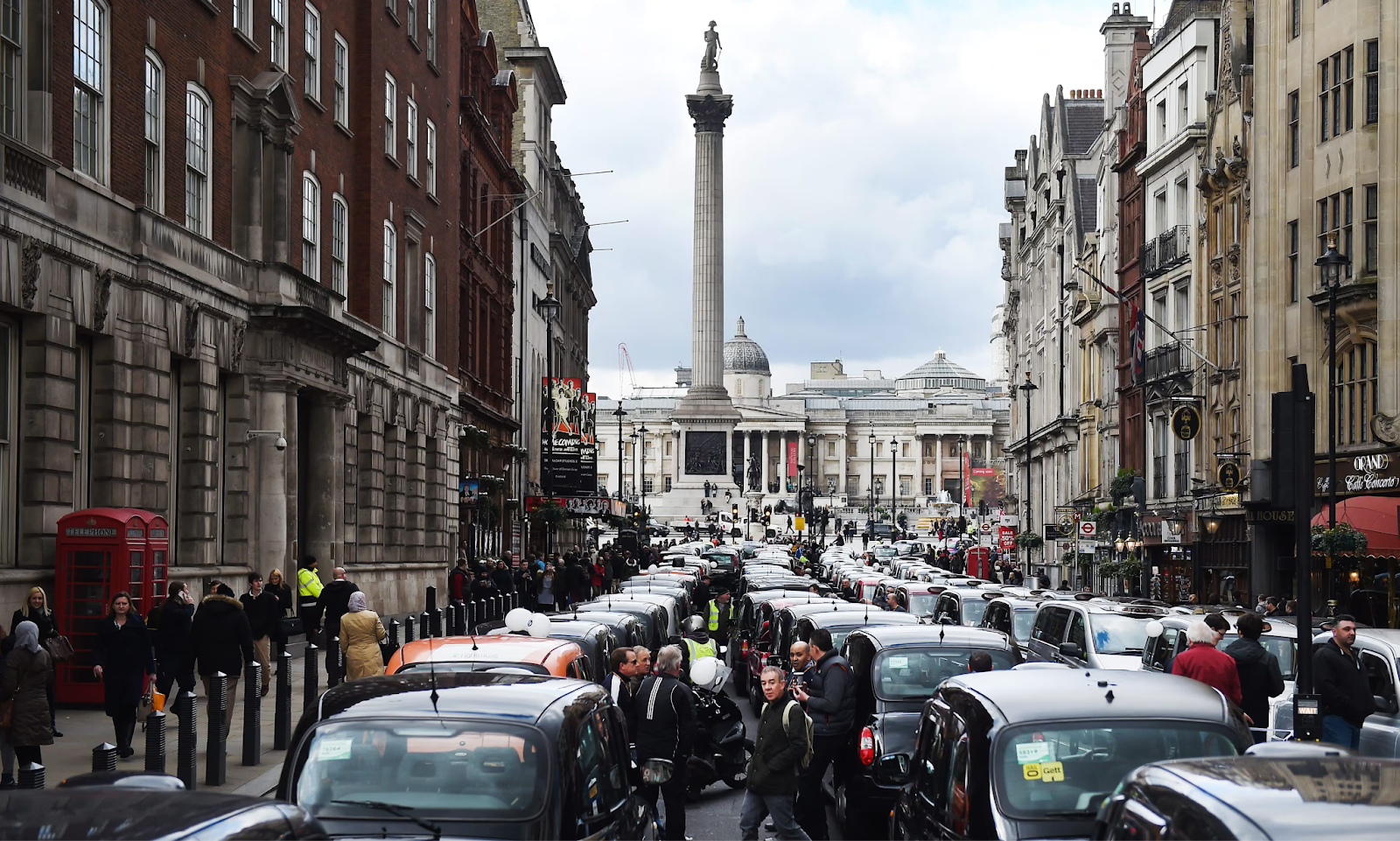
Additionally, we know from recent history that black cabs are willing to mobilise against threats to their incomes. Uber entered London in 2012 and operated within a legal grey area. As Uber gained market share, thousands of cabbies took to the streets, blocking central London’s traffic on several occasions.
Yet, however disruptive Uber’s arrival was, it did not eliminate the need for drivers. It introduced a new class of competitor, but one that still relied on human labour. For black cab drivers, that meant there remained, at least in principle, an adjacent market they could enter by moving into private hire, even if that came with lower status, different working conditions, and the loss of the sunk costs invested in the trade. Robotaxis present a bigger threat, and so the politics of opposition will be sharper and broader than the backlash to Uber’s entry.
This piece gives the reader the tools to understand what opposition will likely emerge and lays out the dynamics that will shape this opposition. It will dig into the regulations that enabled robotaxi providers into London, the incentives at play for each player involved, and analyse the relationships between the technology providers, the incumbent drivers, and the regulators that have the power over the emergent robotaxi market…
